One stop shop for all the research and publications I feel particularly proud of!
Research Philosophy
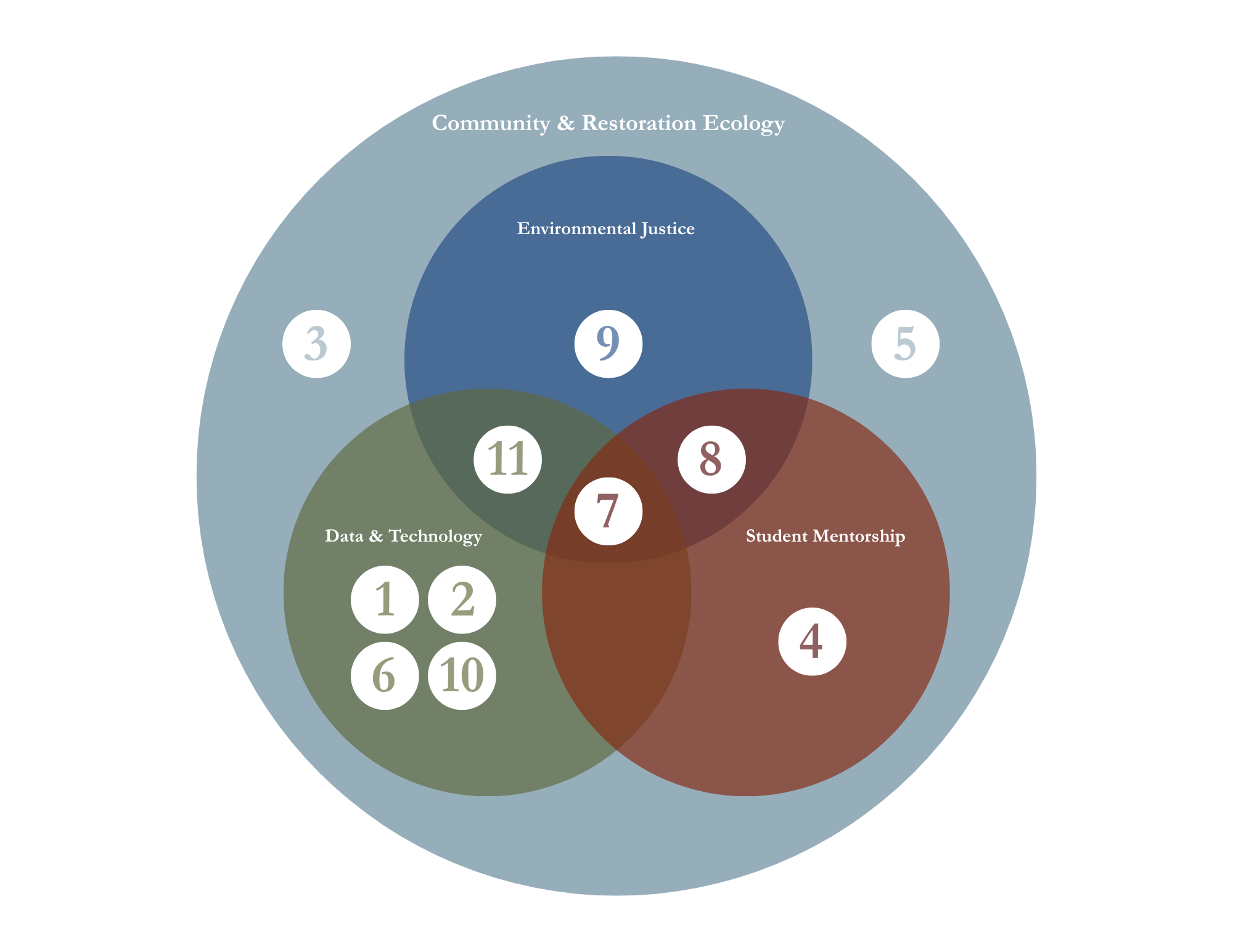
Broadly, all of my research falls under community and restoration ecology with a current and future focus on coastal dunes. Central to my viewpoint on ecology - which is inherited from my mentor Dr. E. Binney Girdler and strengthened by Indigenous friends and collaborators - is the ‘ecology of place’. This is the idea that ecosystems and their processes can only be understood through time, care, and relationship to a specific place over time. Bringing multiple lenses to an ecosystem across years elucidates insights much clearer than other methods.
The lenses I most frequently try to bring with me to the ecosystems I care for are ‘Data & Technology’, ‘Student Mentorship’, and ‘Environmental Justice.’ The ‘Data & Technology’ lens is the easiest to integrate with ecological research and has been with me since the start of my academic journey. From creating my own micro-climate sensors from scratch in undergrad, to learning advances statistical techniques in my master’s, to integrating remote sensing technologies in my Ph.D., this lens is always with me.
The ‘Student Mentorship’ lens is perhaps where I feel the most proud of my work. I was lucky enough to receive outstanding mentorship in my academic journey and I am so proud to begin returning that to burgeoning students now. You can read more about this work in the Dune Crew™️ Tab.
The ‘Environmental Justice’ lens is the area where I am growing the most right now. I always knew I could integrate justice into my pedagogy, but it took seeing some amazing Indigenous ecologists and other friends integrate justice into their ecological research for me to realize I could do the same. I am very proud of my collaboration with the Amah Mutsun Land Trust and I look forward to further ways to incoorporate justice directly into my ecological research.
While it is difficult to practice the ‘ecology of place’ in graduate school, I have brought my care and these lenses from the dunes of Beaver Island Michigan, to the forests of northwestern Indiana, and to the coast of California. I am looking forward to bringing this and more to an ecosystem near my next position for decades to come.
References from Figure
The numbers in the figure above correspond to specific projects and publications. I have also placed the figure at the bottom for ease of scrolling. I have inserted citations, links, summaries, fun facts, and highlights of each project as relevant!
Previously Published Research
1) How does this imperiled dune thistle assemble?
Rivera, B.J., K.C. Wynne, E.B. Girdler. 2021. Large scale presence determinants do not necessarily predict individual growth of an imperiled dune thistle. (Cirsium pitcheri). Great Lakes Botanist, 60(3-4), 97-109. http://hdl.handle.net/2027/spo.0497763.0060.303
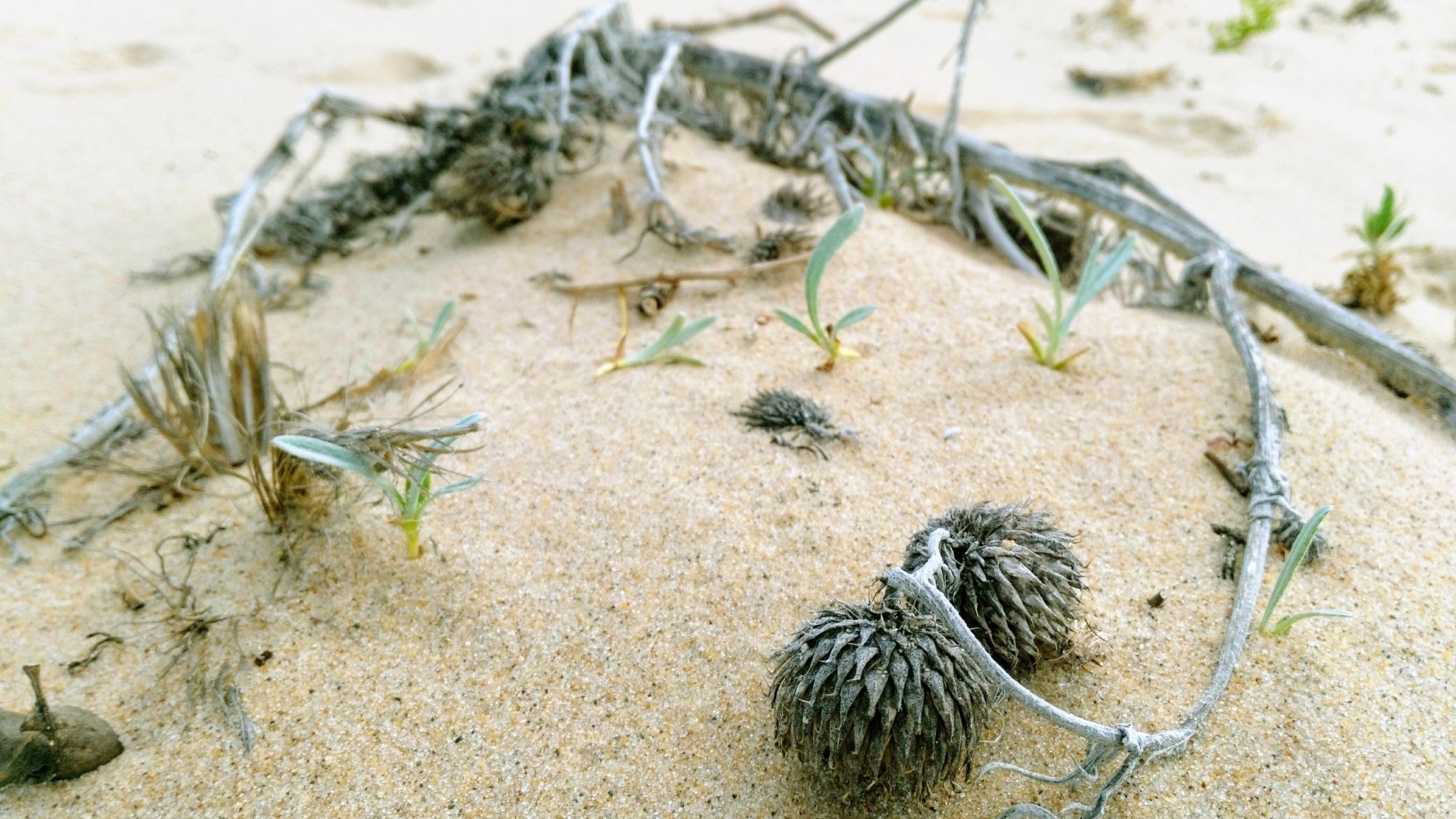
This is my first ever publication and it stems from my senior thesis. I combined my senior thesis which used my self-built arduino-based microclimate sensors to track the growth of this imperiled dune thistle with my dear friend’s (Kate Wynne) senior thesis from the year before which tracked the species’ distribution all across Beaver Island, Michigan. It took years to publish because I would learn how incorrectly I did my statistics in undergrad and came around to do some really interesting statistical methods that told the same story ultimately (I would love to talk to someone about my sinusoidal regressions and RDA randomization test sometime!).
2) Can a cellulase help us use less glyphosate? No, but also Monsanto is lying to you
Rivera, B., Meilan, R., Scharf, M., Karve, R., Jenkins, M. 2022. The effect of a novel herbicide adjuvant in treating Amur honeysuckle. (Lonicera maackii). Invasive Plant Science and Management, 15(2), 81-88. https://doi.org/10.1017/inp.2022.15
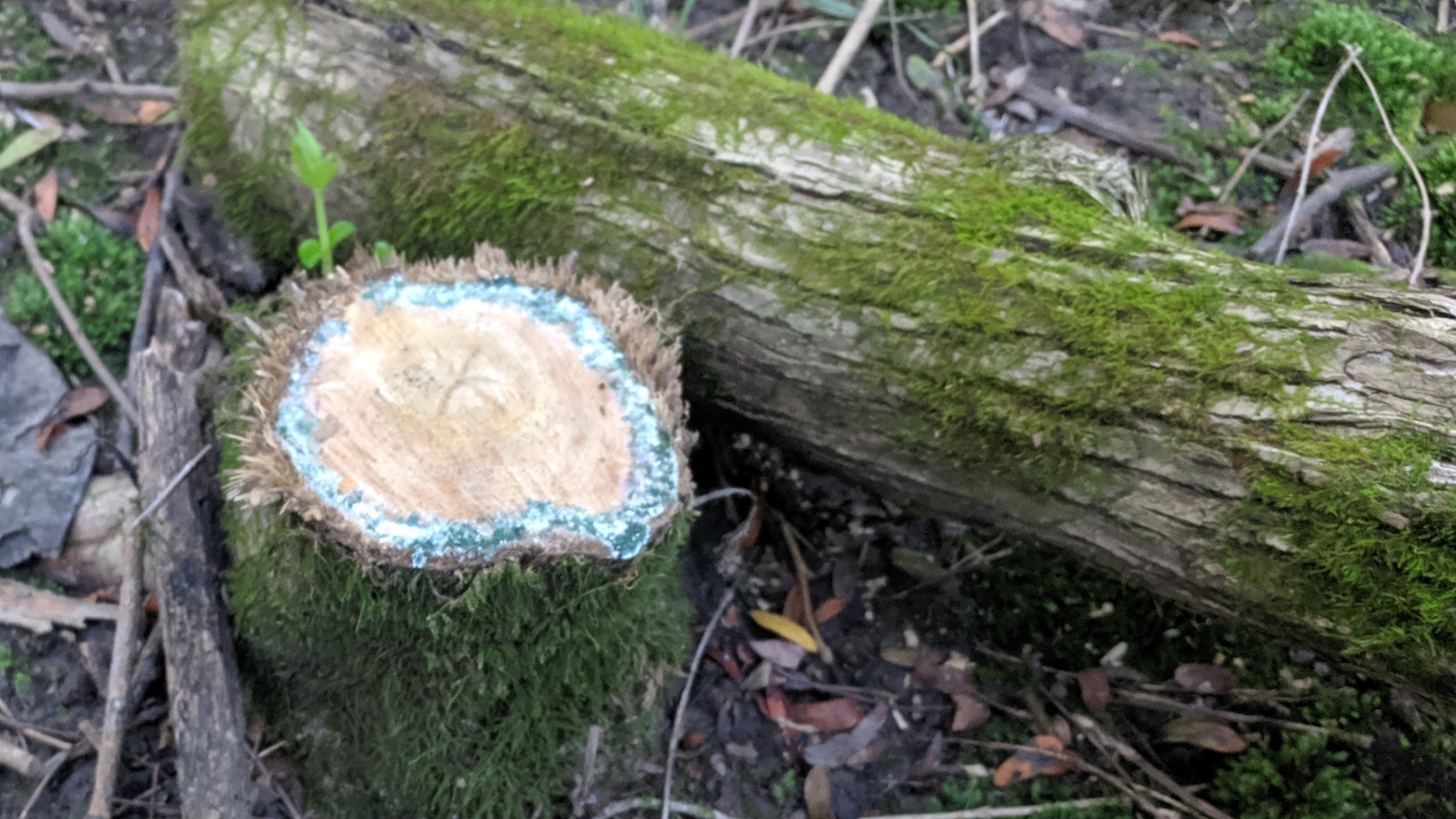
This is the first publication of my master’s! We tried to see if adding a cellulase - which can digest the cell walls of plant cells - could help use less glyphosate when removing this invasive shrub. It did not seem to help, but we got the same amount of control using ~1/2 or 1/3 the amount of glyphosate than recommended by Monsanto. This is with no surfactants which is what typically makes the stuff extra cancerous! So, that feels important to know.
3) Oh no! This invasive shrub can self-pollinate!?
Rivera, B., Meilan, R., Jenkins, M., 2025. Patterns in Selfed Seed Production and Germination in Amur Honeysuckle (Lonicera maackii). Invasive Plant Science and Management, 1-30. https://doi.org/10.1017/inp.2025.5
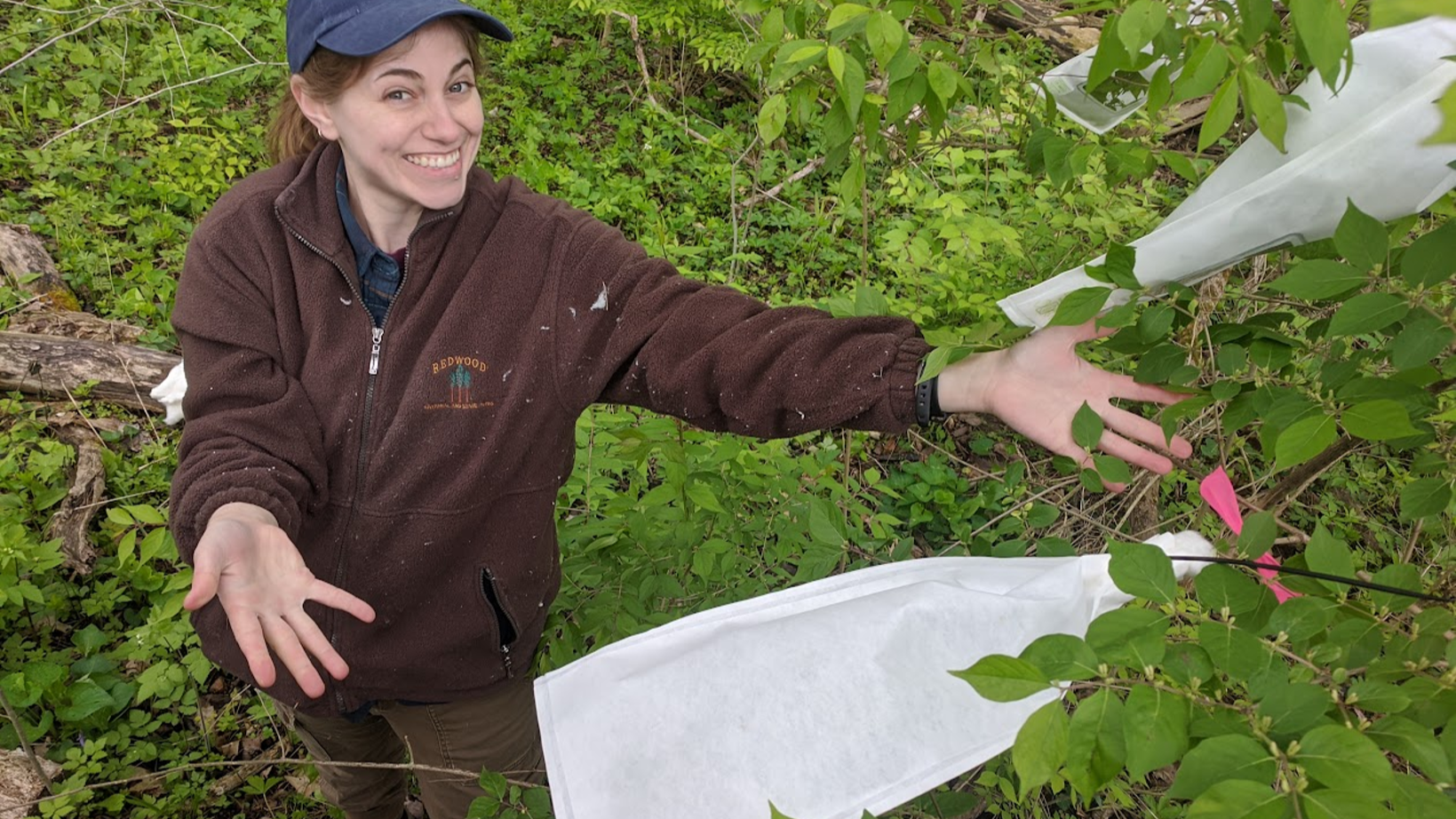
Unfortunately, this is the chapter I am most proud of in my master’s and it is also the worst news of the bunch. I am proud because I noticed a very small incongruence in the literature and it spiraled out into an original project with a cool design. It is a bummer because this super invasive species can self-pollinate and produce viable seeds, which only makes it more invasive. Better to know that, though!
4) What the heck is going on with the history and current state of community assembly literature on dunes?
Rivera, B., Belone, J., Vega, K., Mosqueda, S., et al, 2025. How Ya’ Dune-ing: a systematic review of coastal dune plant community assembly. Journal of Coastal Conservation, 29(3), 23. https://doi.org/10.1007/s11852-025-01107-z
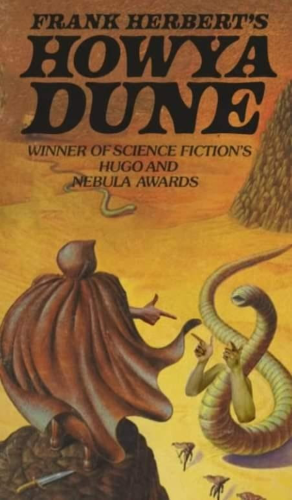
This is the review I did with the Dune Crew™️ and I strongly recommend you read more about that in the Dune Crew™️ Tab. It is also cool because this started as a term paper in my Ph.D. and sprialed into a really useful resource for folks looking to get into community assembly literature!
5) Can mulching heads remove the invasive Amur honeysuckle without damaging native plant communities?
Rivera, B., Meilan, R., Jenkins, M., 2026. Higher Intensities of Mulching-Head Treatments Limit the Response of a Target Invasive Shrub (Lonicera maackii) and Promote Herbaceous-Layer Species Diversity. Forest Science, https://doi.org/10.1007/s44391-025-00056-2
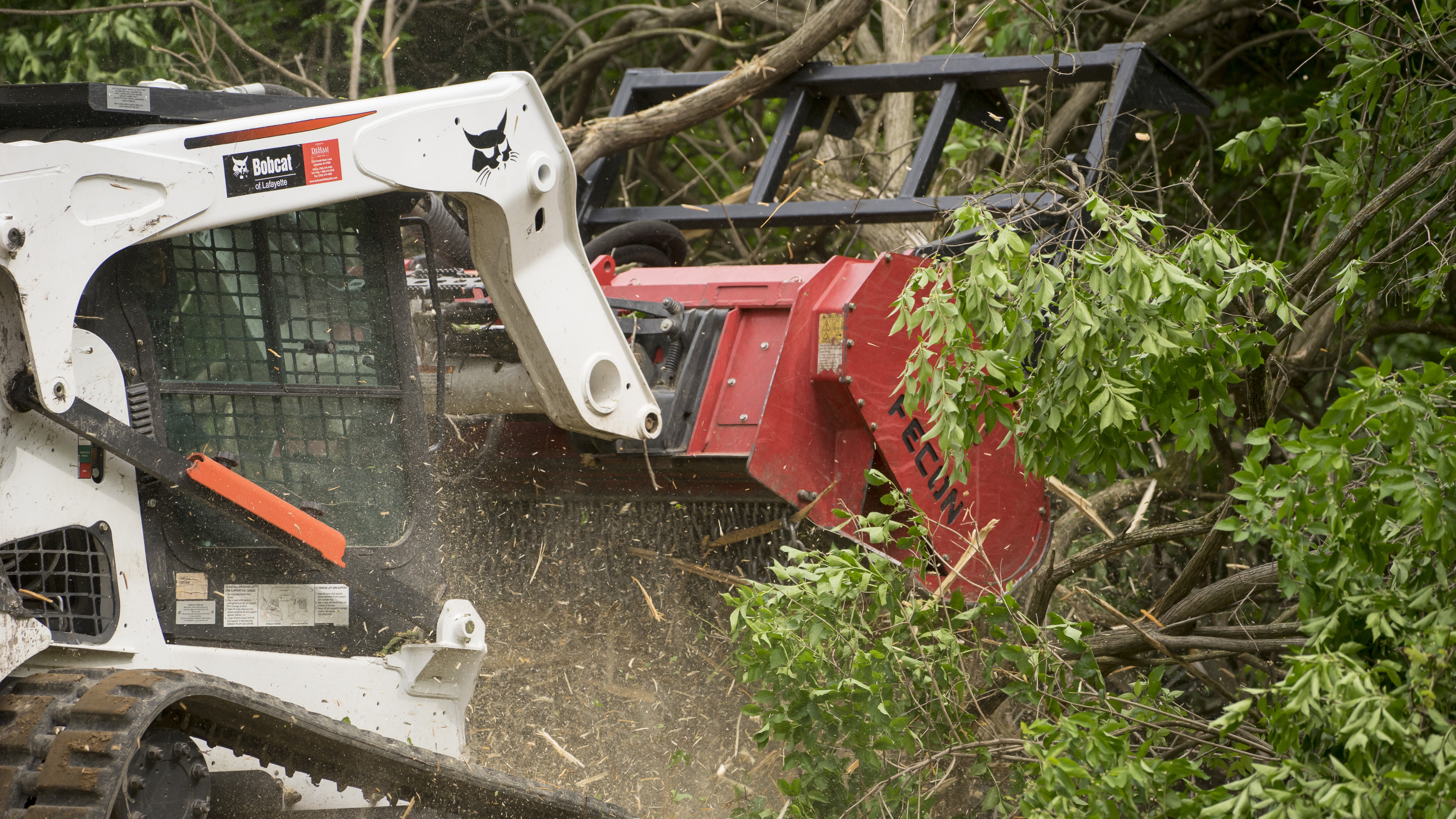
This is a follow-up study about the longer term effects of mulching that invasive shrub. I did some cool multidimensional stats and visualizations in there too which is fun!
Current Focuses
6) Do community assembly rules change along gradients of stress?
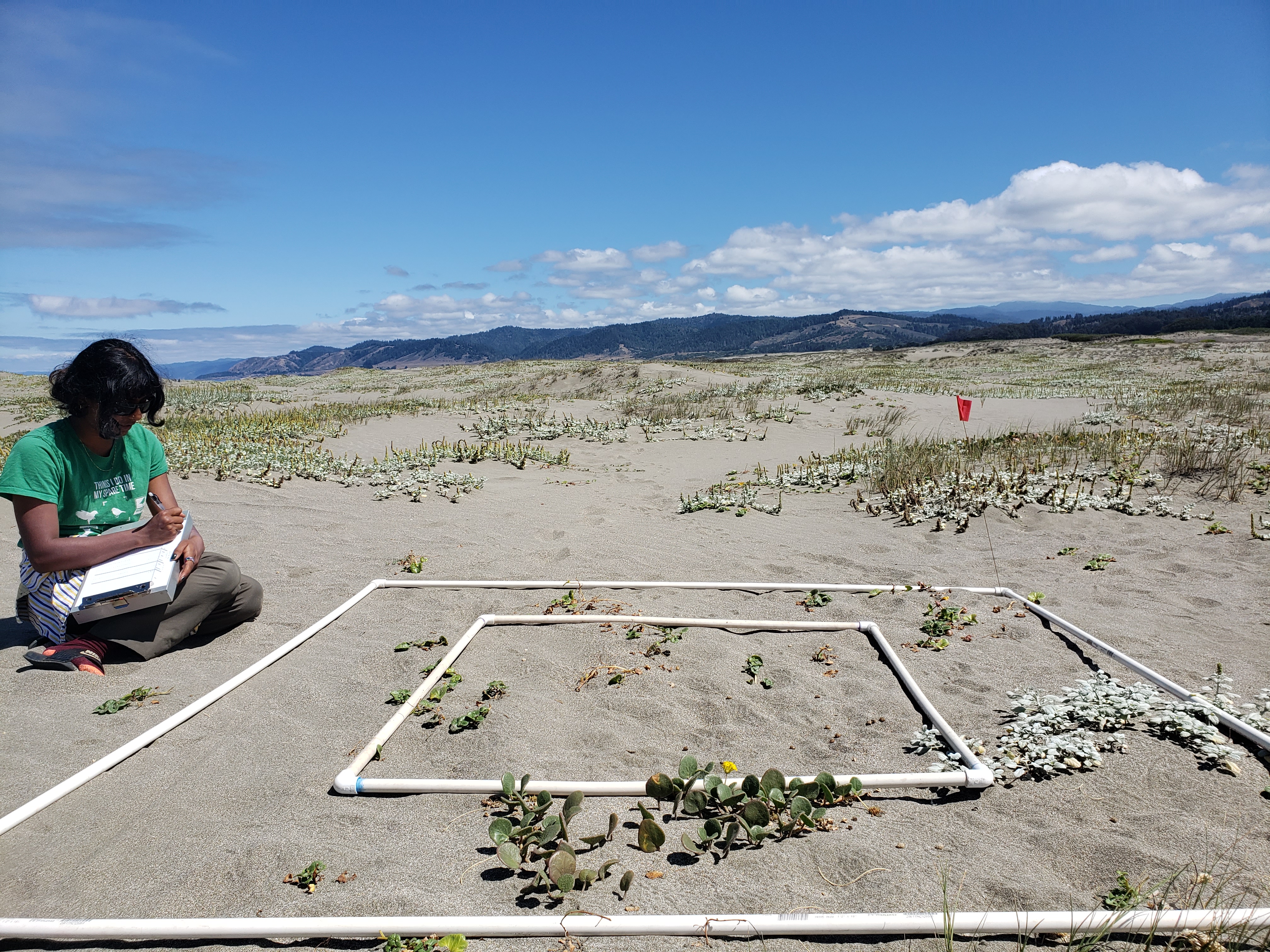
Rivera, B., Mathew, A., Funk, J., Magney, T., 2026, Scale-dependent support for the Stress Gradient Hypothesis using a negligible effects approach in dune ecosystems. In Review
I really went crazy in the community assembly theory and statistical methods here! I am so excited for this publication to be unveiled because I think there are multiple new approaches in there that could be useful to others! Putting community dissimilarity into the context of two of my favorite community assembly theories with some conceptual diagrams was a lot of fun. I stole a concept from political science called Negligible Effects that I think ecology desperately needs! Cool experimental design, too!
7) Can we use too much technology to find out the kinds of dunes these plants with known traditional uses like to live on?
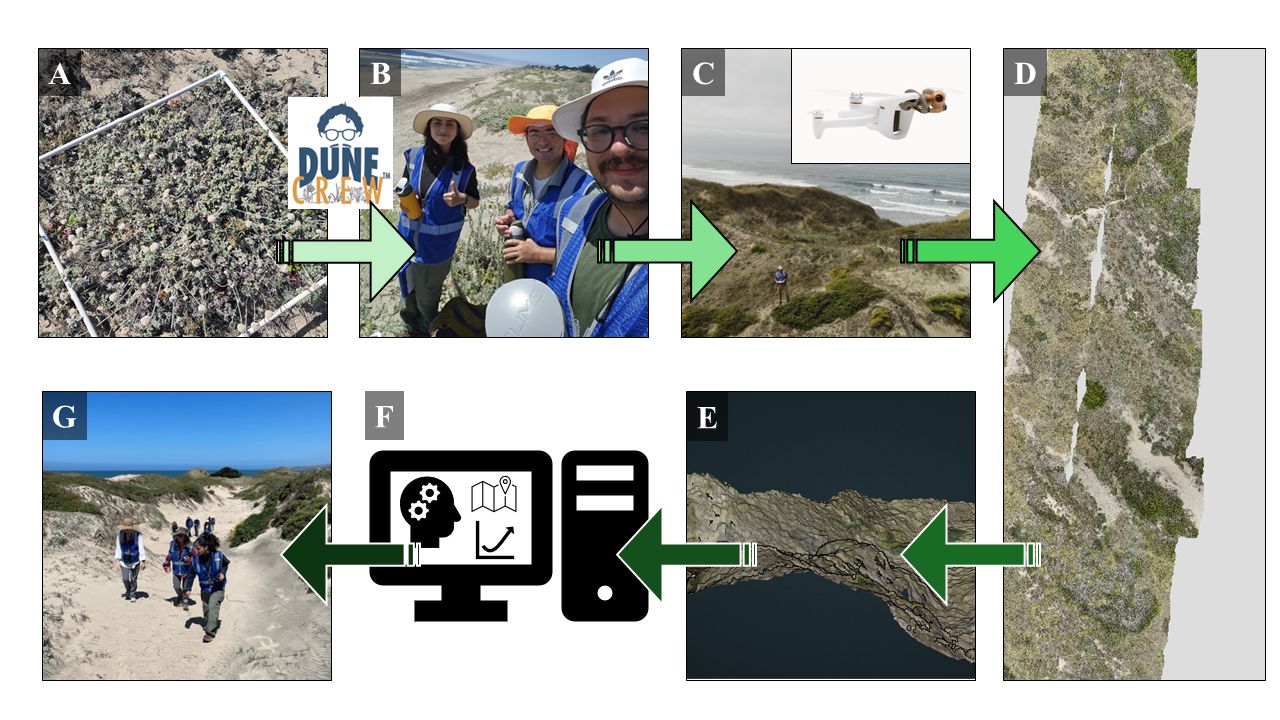
Rivera, B., et al, Mapping and predicting the distribution of ethnobotanically important dune plants: dune restoration and the reawakening of cultural practices with the Amah Mutsun Land Trust. In Prep
This project really embodies the type of research I want to continue to do in my career. It encompasses all the lenses I focus on in my research. I am so grateful for the AMLT for working with me to combine classic vegetation surveys, remote sensing, ethnobotany, geospatial data, drone flights, advanced statistical techniques, and so much more into one project!
8) Can this seemingly small pedagogical practice help inclusivity and sythesis in STEM?
Rivera, B., Belone, J., Vega, K., Mosqueda, S., et al, The Dune Crew: Raising Student Confidences through Small Group Mentorship. In Prep
There is much more detail in the Dune Crew™️ Tab, but I really believe in the practice of small scale mentorship groups. Working on a pedagogy forward manuscript is a new challenge that I am enjoying!
9) Can we share the story of this tribal band’s history and current relationship to dune ecosystems?
The Amah Mutsun & Dunes. ArcGIS StoryMap. In Prep
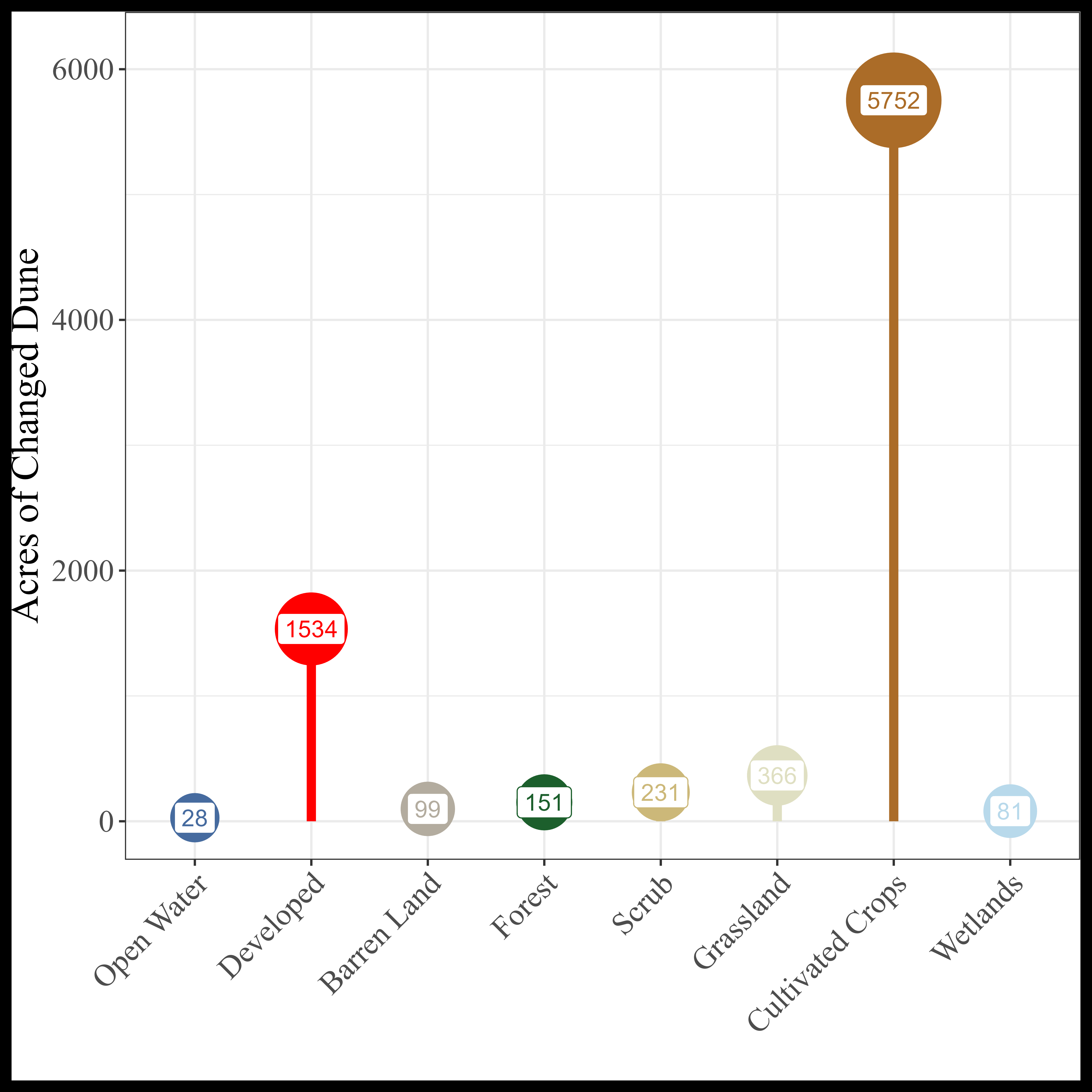
How to share without oversharing? An old question that scientists have frequently never asked. Hopefully this can become a useful tool for the AMLT!
Future Directions
10) How can I clap back at a guy who was kind of rude to me at a conference one time years ago?
Rivera, B., et al., How self-pollination can shorten the lag-period for invasive species. Future Direction
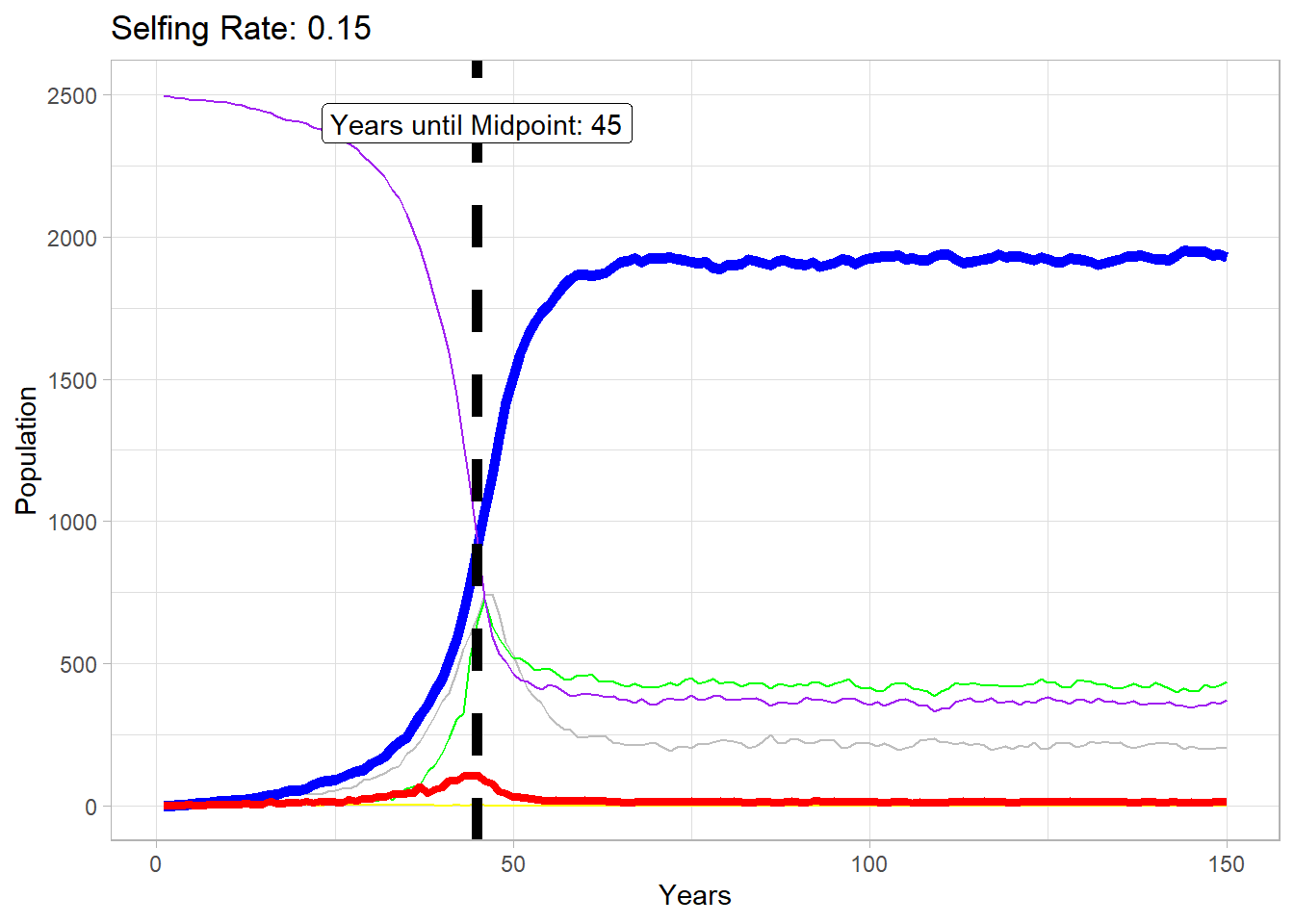
Years ago, a man interrupted my presentation of my self-pollination research (#3) to tell me that my research did not matter at all. I disagree and have since created a simulation to prove my point. Tweaks to the simulation are needed, but this project is shockingly close to being publication ready considering it has nothing to do with my Ph.D. thesis. Now, if only I knew who that man was! I would email him a link!
11) Can we monitor invasions and restorations at fine scales across large scales?
Rivera, B., et al., Remotely sensing invasion across the latitudinal gradient of California dune ecosystems using temporally dense multispectral data. Future Direction
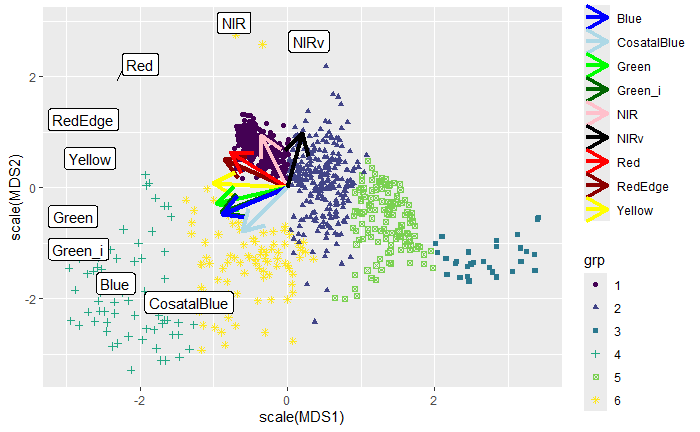
After getting access to Planet data, learning more about multispectral data, and reading an Italian dune paper, I’ve realized that there may be a way to track invasive species at a 3x3 meter resolution across large geographic spans. I worry about who gets access to these data (I would want to make this publicly available and not stuck in a bureaucrat’s office) and over extending its usefulness (I don’t think it would applicable to all the world’s dunes!), but it could be a very useful tool! I also wonder if there is a way to do some community assembly theory work with these data??